
Structured Data Does Not Automatically Mean Usable Data
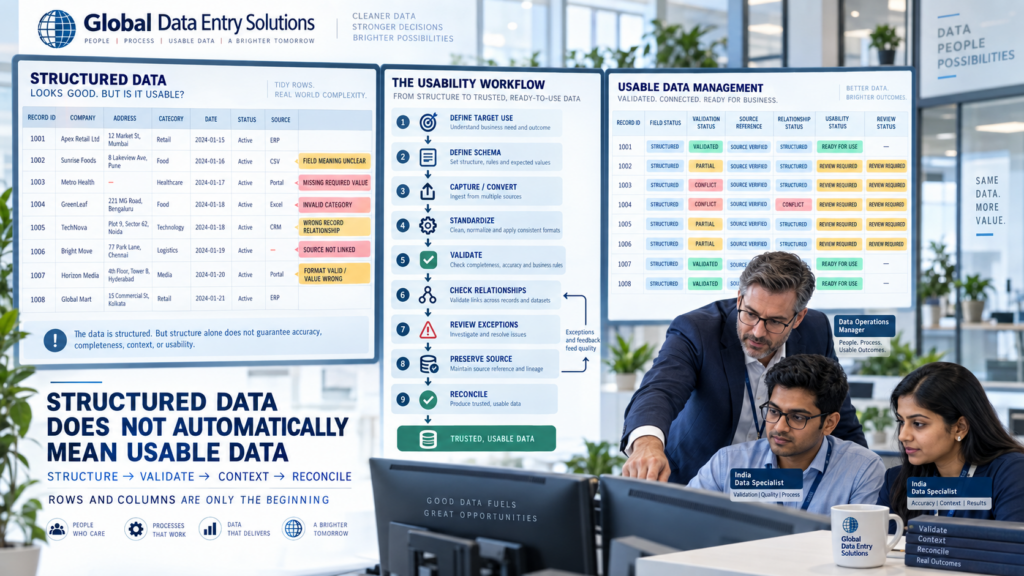
A dataset can be perfectly organized into rows and columns while still being difficult to use. Learn why field meaning, validation, completeness, source traceability and reconciliation matter beyond structure.
More Automation Does Not Automatically Mean Less Manual Work
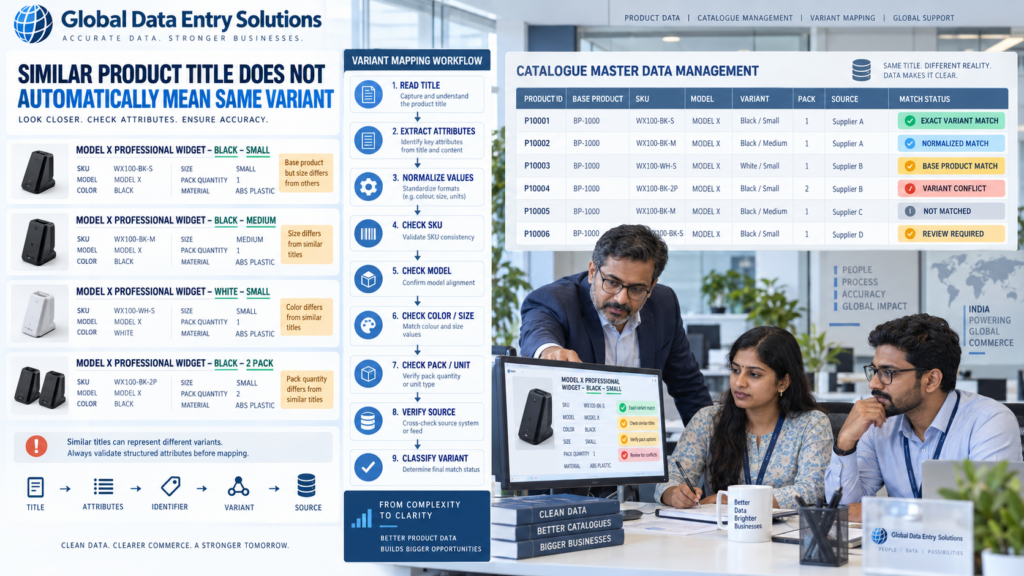
Similar product titles can represent different sizes, colors, models or pack quantities. Learn how structured variant fields and source validation improve product catalog matching.
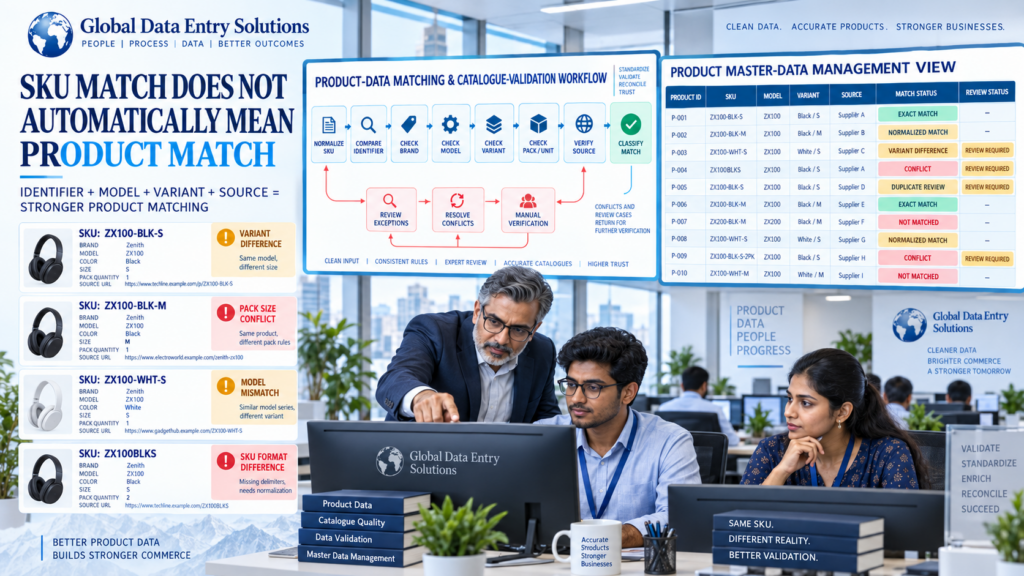
A Product SKU Does Not Automatically Identify the Correct Product Record
A record can be marked closed while client review, source conflicts, dependencies or reconciliation still remain open. Learn why final disposition and controlled closure matter.
Web Data Extraction Is Not Complete When the Scraper Returns Rows

Web extraction can return thousands of rows while duplicates, missing fields, source conflicts and mapping issues remain. Learn how validation and structured processing turn raw extraction into usable data.
Data Validation Is Not the Same as Data Accuracy
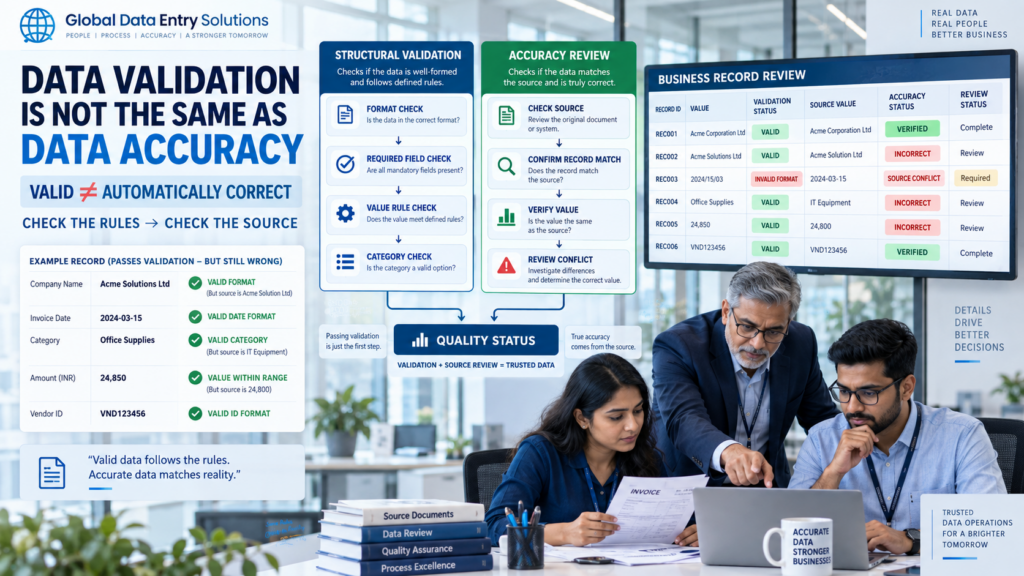
A data value can pass every validation rule and still be wrong. Learn the difference between data validation and data accuracy, and why source verification, exception handling and reconciliation matter.
More Data Does Not Automatically Mean Better Data Quality
Duplicate removal is an important part of data cleansing, but it is only one control inside a much broader data-quality workflow. A dataset can contain no obvious duplicates and still suffer from inconsistent formatting, missing values, invalid categories, stale information, conflicting records and incorrect field structures. A stronger cleansing process looks at the full condition […]
Data Cleansing Is Not Complete When the Duplicates Are Removed
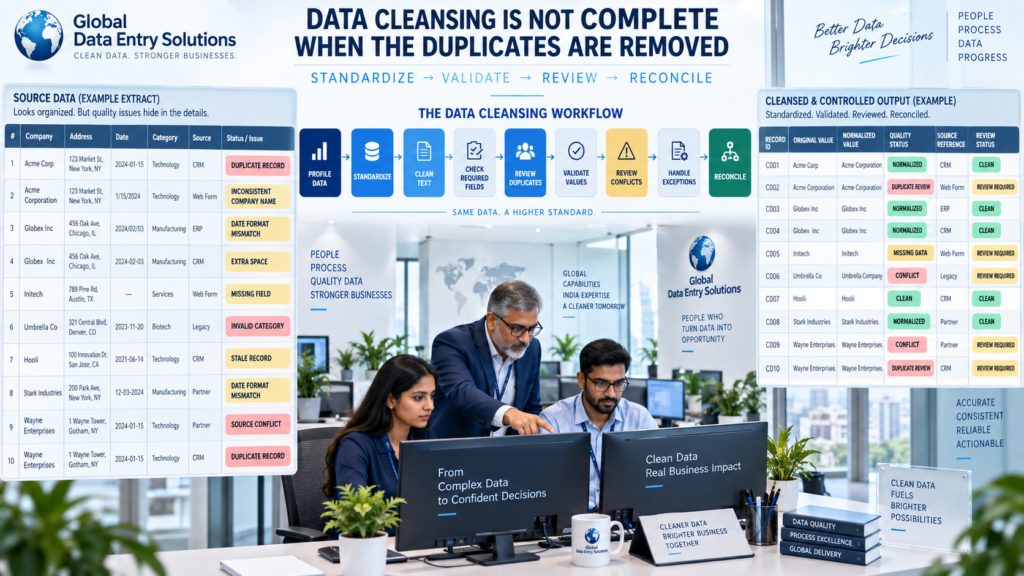
Removing duplicates does not automatically make a dataset clean. Learn how formatting, missing values, validation, source conflicts, exception handling and reconciliation strengthen data cleansing.
A Clean Excel File Is Not Automatically Ready for Import
A spreadsheet can look clean, organized and complete while still containing problems that make it unsuitable for import into another system. Consistent fonts, aligned columns and tidy formatting do not automatically prove that required fields are complete, identifiers are unique, values match the target schema or records will load correctly. A stronger import-preparation workflow validates […]
PDF to Excel Is Not Complete When the Spreadsheet Opens
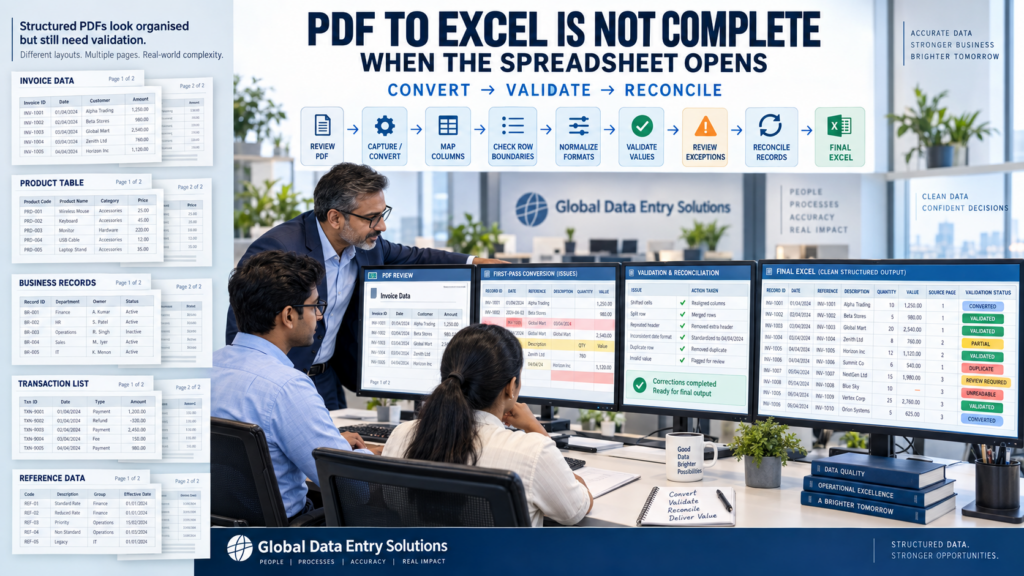
A PDF can convert into a working Excel file while still containing shifted rows, wrong columns or missing values. Learn how validation, exception review and reconciliation make the spreadsheet more reliable.
OCR Output Is Not Automatically Clean Data: What Should Happen After Text Recognition?
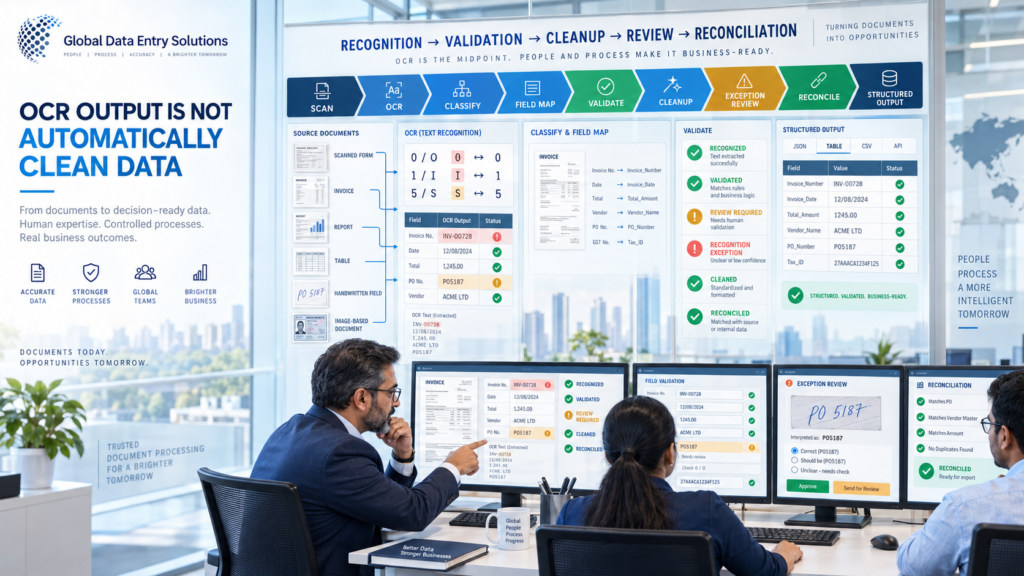
OCR can make scanned text machine-readable, but recognized text is not automatically clean data. Learn why validation, cleanup, exception review and reconciliation still matter.