
A Completed Backlog Does Not Automatically Mean the Process Is Stable
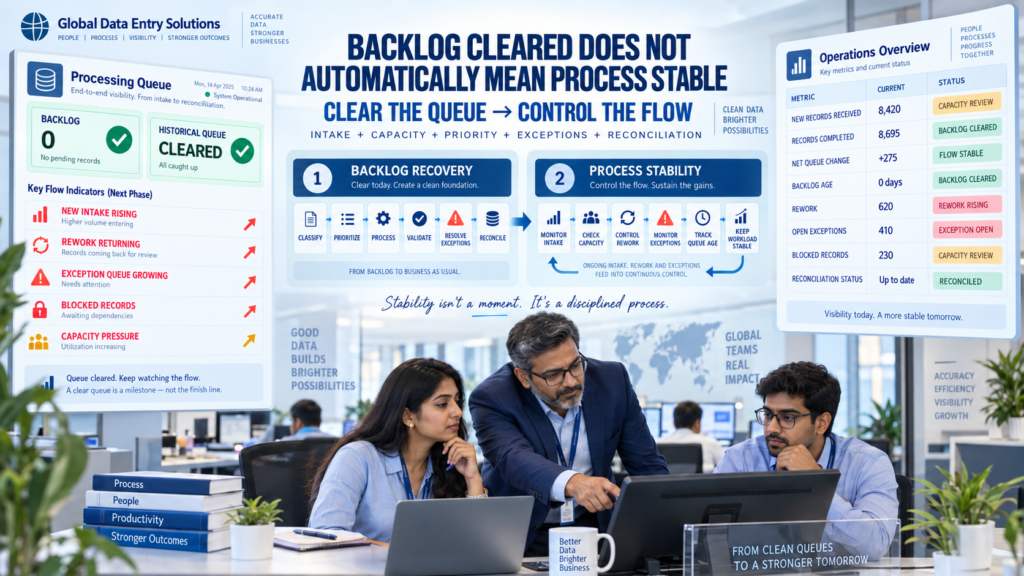
Clearing a backlog can create immediate relief, but the queue may return if intake, capacity, rework and exception problems remain unchanged. Learn how backlog recovery differs from process stability.
A Closed Record Does Not Automatically Mean the Work Is Finished
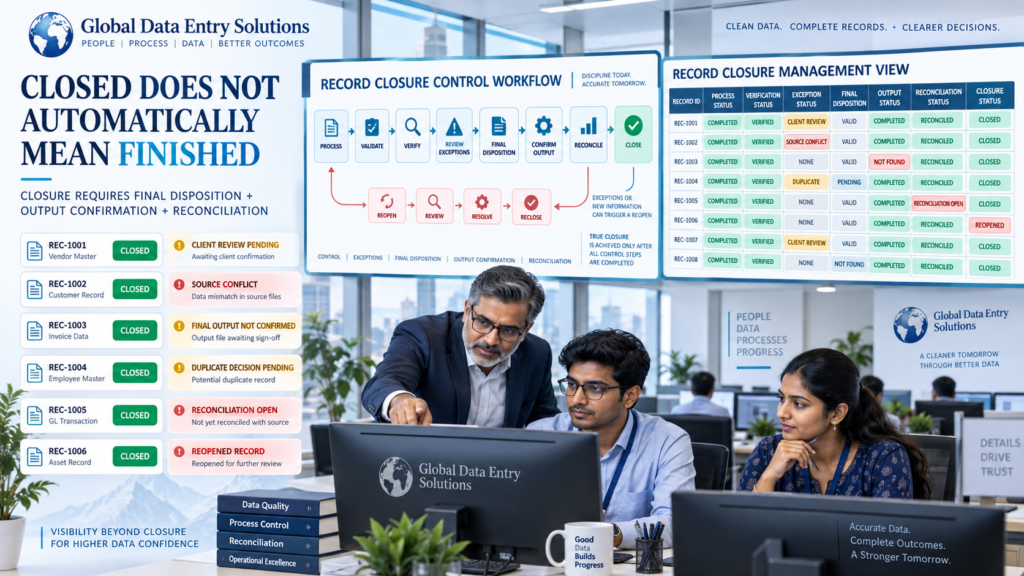
A record marked “Closed” can create a strong sense of finality. But closure is only meaningful when the workflow defines what “closed” actually means. A record may be removed from the active queue while a source conflict, client dependency, unresolved exception, downstream update or reconciliation step still remains open. Closed and Finished Are Not Always […]
A Closed Record Does Not Automatically Mean the Work Is Finished
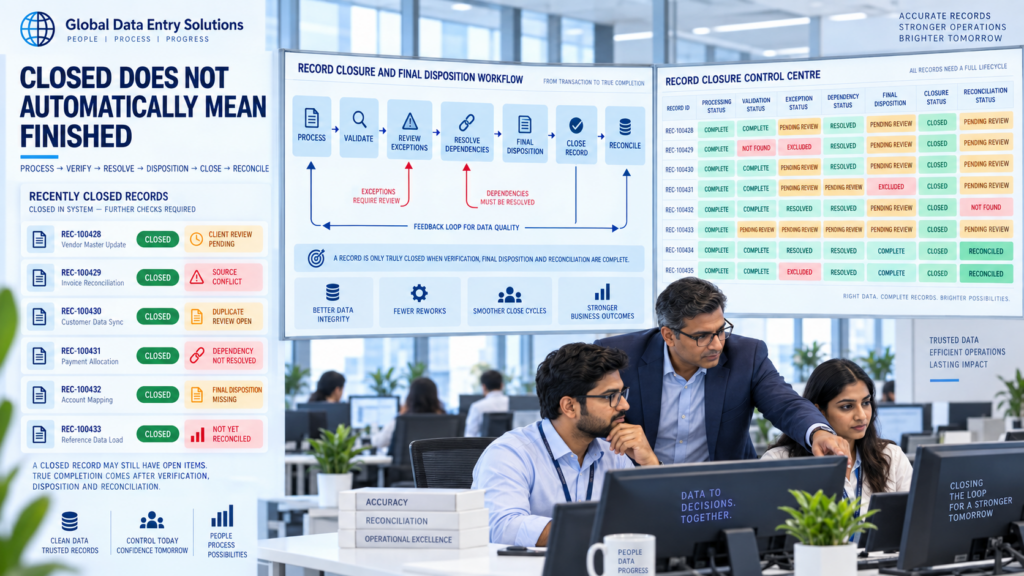
A low error rate can look reassuring while rework, backlog, unresolved exceptions or unreconciled records continue to grow. Learn why workflow health needs a broader operational view.
A Zero Exception Queue Does Not Automatically Mean the Process Is Under Control
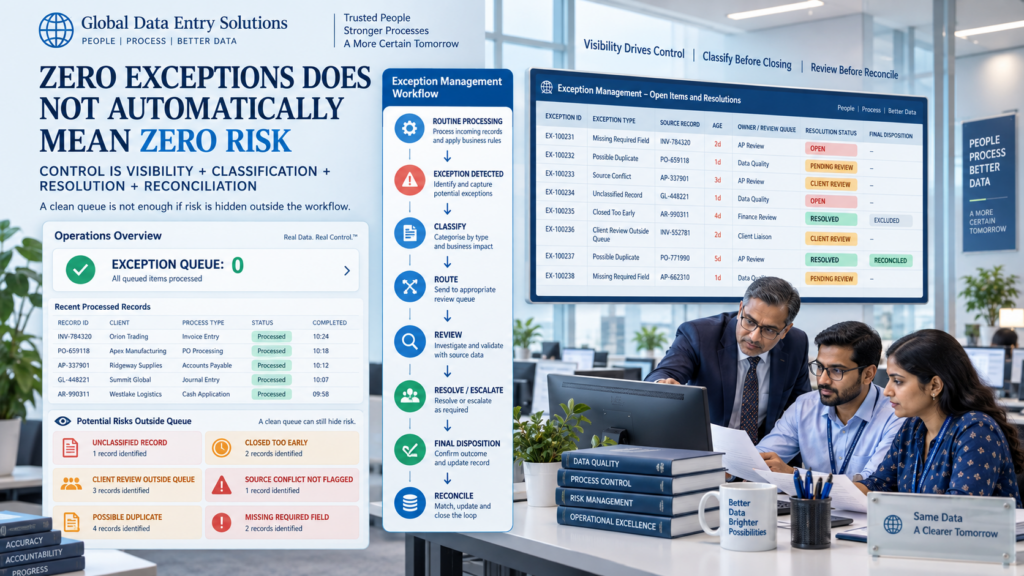
An empty exception queue can look like a sign of a perfectly controlled process. No unresolved records. No flagged conflicts. No open review items. But zero visible exceptions can mean several very different things: the process may truly be running cleanly, or exceptions may be getting closed too early, missed entirely, routed outside the queue […]
A Completed Record Is Not Automatically a Verified Record
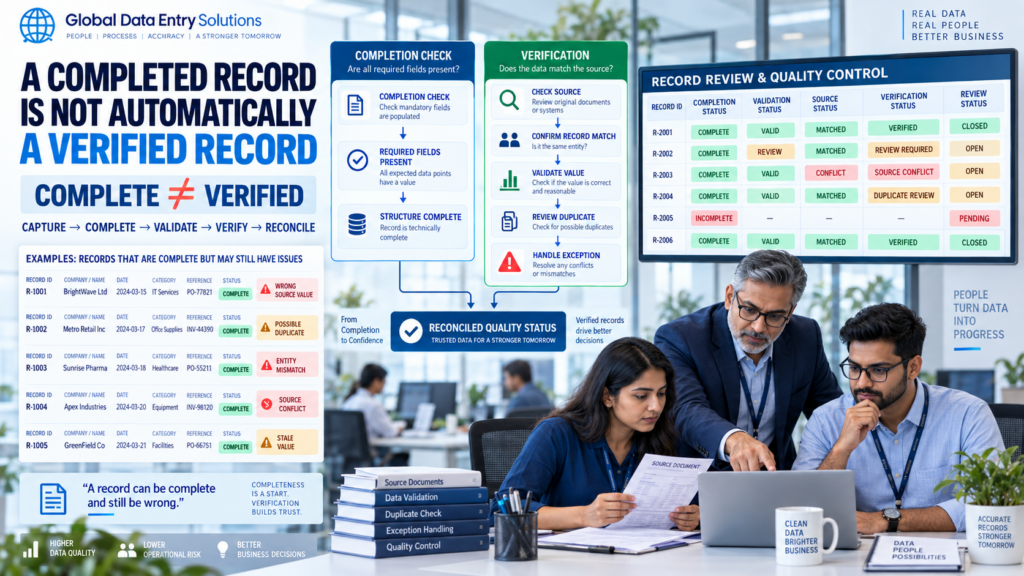
Record completion confirms that required fields are populated, while verification checks whether those values are supported by the correct source and record context.
Data Validation Is Not the Same as Data Accuracy
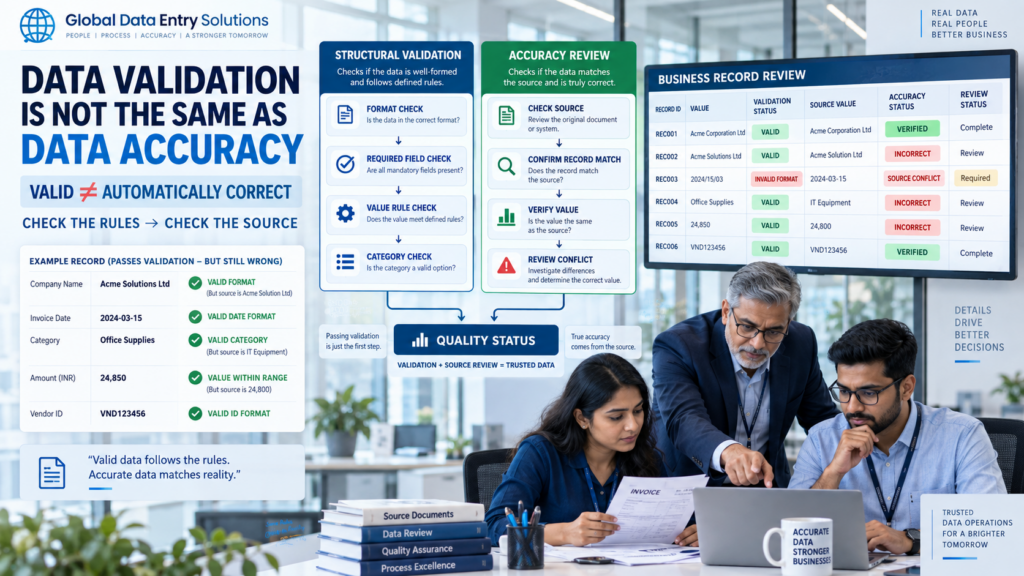
A data value can pass every validation rule and still be wrong. Learn the difference between data validation and data accuracy, and why source verification, exception handling and reconciliation matter.
More Data Does Not Automatically Mean Better Data Quality
Duplicate removal is an important part of data cleansing, but it is only one control inside a much broader data-quality workflow. A dataset can contain no obvious duplicates and still suffer from inconsistent formatting, missing values, invalid categories, stale information, conflicting records and incorrect field structures. A stronger cleansing process looks at the full condition […]
Adding More People Does Not Automatically Create More Processing Capacity

Adding more people can increase potential processing capacity, but real throughput also depends on actionable work, classification, validation, exceptions, rework and downstream review.
A Full Queue Does Not Automatically Tell You What Should Be Worked First
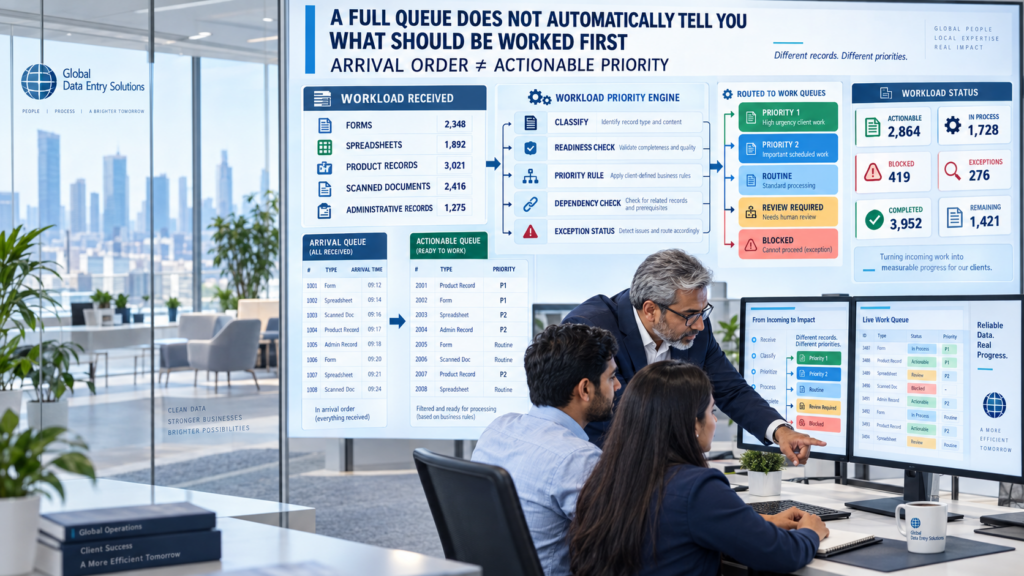
A queue can contain hundreds or thousands of records and still provide very little guidance about what should be worked first. Volume tells you how much work exists. It does not automatically tell you which records are ready, which are urgent, which are blocked, which require specialist handling, or which should remain outside routine processing. […]
Records Processed Does Not Automatically Mean the Workload Was Reconciled

Processing totals do not automatically prove that a workload is fully accounted for. Learn how status tracking, exception management, duplicate review and reconciliation provide stronger operational control.